Behind the Scenes With Author Marvin Rolnick
MONICA VIERA • UPDATED: March 17, 2025
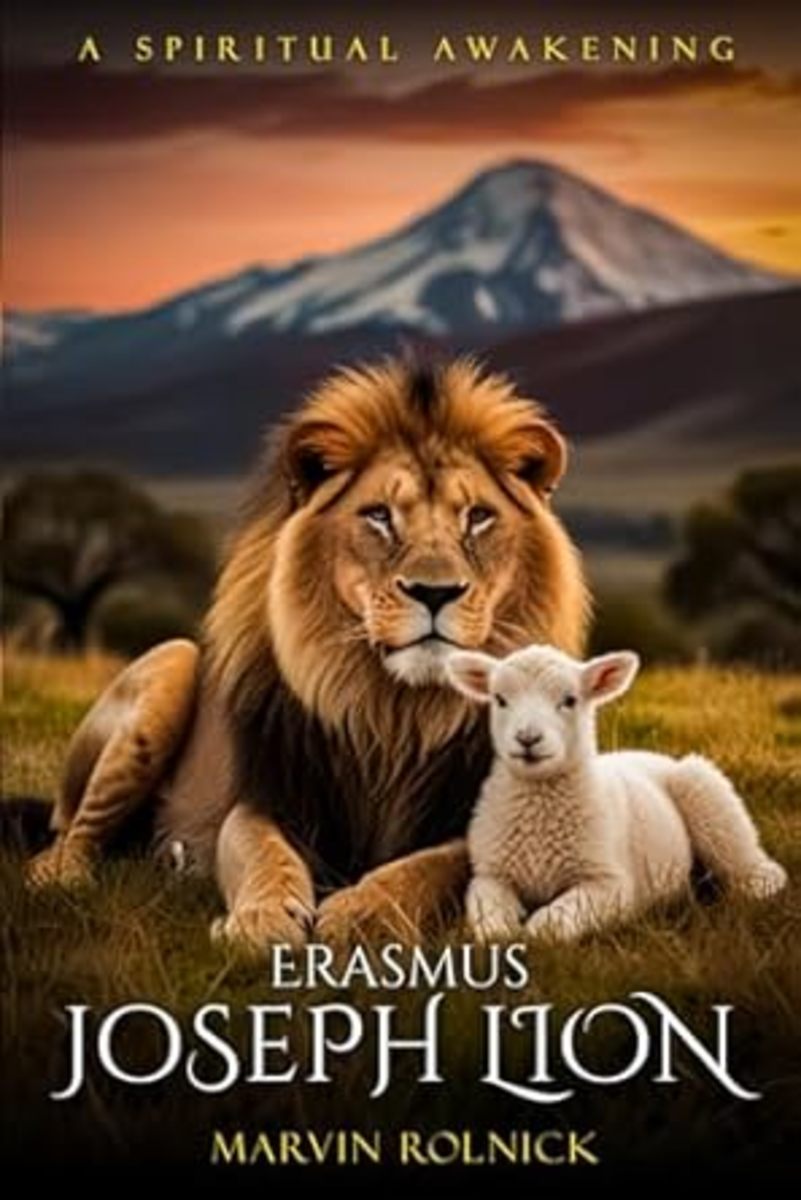
If you’re like many of us, you may have wondered if there is more to life than what appears on the surface. Maybe you’ve been bogged down by resentments, anger, or dualistic thinking, and you’ve hoped for a way out of the cycle of despair. Author Marvin Rolnick demonstrates that there is an alternative way to live, as depicted by his new book ERASMUS JOSEPH LION: A Spiritual Awakening.
In this interview, we go behind the scenes with Marvin Rolnick as he describes his creative process behind this gem and understand how it is relevant to everyone in today’s world. Keep reading to uncover what Rolnick has to say about a spiritual awakening.
What was the inspiration behind your book?
It all started in early 2020, right when COVID shut the world down. With everything closed, I took to the park to read and clear my mind. One day, a car pulled up, blasting the loudest, most explicit rap music I’d ever heard. Two young women inside were screaming at the top of their lungs—shouting words like “pigs,” the “N” word, and the “C” word for women.
Now, I’m all for artistic freedom, but something about blasting that kind of energy into the world felt off. These girls were in a trance—completely lost in the music, moving like religious zealots, oblivious to everything around them. I remember thinking, Is this really the best we have to offer? Aren’t there more uplifting words, more empowering messages than this?
That moment sparked something in me. I went home, sat down, and started writing. What poured out was a spiritual poem in rhyme. I thought it was powerful. When I read it to my son, he said, “It sounds like you’re preaching a sermon.”
Maybe I was! But I liked the sound of it, so I called my first piece Sermon Rap I. And that was just the beginning.
What are some of the themes your book explores?
If you look at history—any era, any civilization—it’s the same story over and over. People can’t stop hurting, fighting, or even destroying themselves. Why?
In my book, a group of animals embarks on a quest to understand this, and they come face-to-face with the real culprit—the dark mind. Some call it the ego, some call it the devil, others call it the monkey mind. Whatever the name, it’s that voice in our heads that never stops talking, always judging, always attacking, always needing to be right. It thrives on conflict, on fear, on never having enough.
But here’s the kicker: it doesn’t have to control us. My characters take a deep dive into this mind, studying its tricks, exposing its patterns, and—most importantly—learning how to undo it. Because beyond that noise, beyond all the fear and division, there’s something much greater waiting for us.
What was the writing process like for you?
Writing the story? That part was easy! The words flowed effortlessly—I never hit writer’s block, never had to stop and force inspiration. It was like the story already existed, and I was just channeling it onto the page.
But grammar? Structure? Punctuation? That was another story. Commas, colons, semicolons—those little guys gave me a run for my money! The hardest part wasn’t writing; it was making sure my ideas were clear, polished, and structured in a way that did them justice.
What were some of the challenges of writing your book?
Aside from wrestling with grammar and structure, the biggest challenge was navigating the publishing world. Writing the book was the fun part—figuring out what to do with it was a whole different beast.
I had to sift through so many so-called “experts,” trying to figure out who genuinely wanted to help versus who just saw me as an easy payday. It was a minefield! I quickly learned that while there are great people in the industry, you have to be careful and do your research.
How did you come up with the different characters in your story?
My main character, Erasmus Joseph Lion, had been in my mind for decades. Back in 1970, when I read Jonathan Livingston Seagull, I thought up the name Erasmus Joseph Lion, along with his wife, Mary Sue Lion. But at the time, they were just names—no story, no adventure, just waiting in the background.
Then, years later, when I started writing, something magical happened. As soon as I gave Erasmus a voice, other animals began showing up, each with their own personalities, quirks, and wisdom. They didn’t feel like characters I created—they felt like real beings who had been waiting for me to listen.
So, I let them take the lead. I followed their words, their lessons, their journeys. And that’s how the story was born.
What would you like readers to take away from your book?
Most of us go through life thinking we’re just these small, fragile bodies with private thoughts, battling fear, doubt, and loneliness. We believe we’re separate from each other, never quite good enough, never fully at peace. We live scared of death, unaware of how much we’re missing out on right now.
But here’s the truth—we are so much more.
Beyond all the noise, beyond the fear and the struggles, there is a part of us that is pure, powerful, limitless. Our light has been blocked for so long that we’ve forgotten who we really are.
I want readers to walk away knowing this: You are not small. You are not broken. Behind all the self-doubt and conditioning… You Are a Superstar.
What advice would you give to other writers who want to write about spirituality?
Write your truth, exactly as you see it.
Everyone’s spiritual journey is different—no two paths are the same. But in the end, we all find ourselves returning to the same place: the mind of infinite intelligence, the space of pure love.
So don’t worry about trying to sound wise or profound. Just write what’s real for you. Because you never know whose life your words might change.
This version keeps your powerful message intact while making it more engaging, vibrant, and emotionally compelling for readers. What do you think?
**This concludes the interview with author Marvin Rolnick. To visit his website and buy his book, click here. It is a wonderful read that you won’t be able to put down.